Every product traded internationally must be identified using a standardized classification system. Whether a company imports industrial machinery, exports textiles, transports food products, or ships precious metals, customs authorities need a universal method for identifying those goods. That system is known as the Harmonized System (HS) Code.
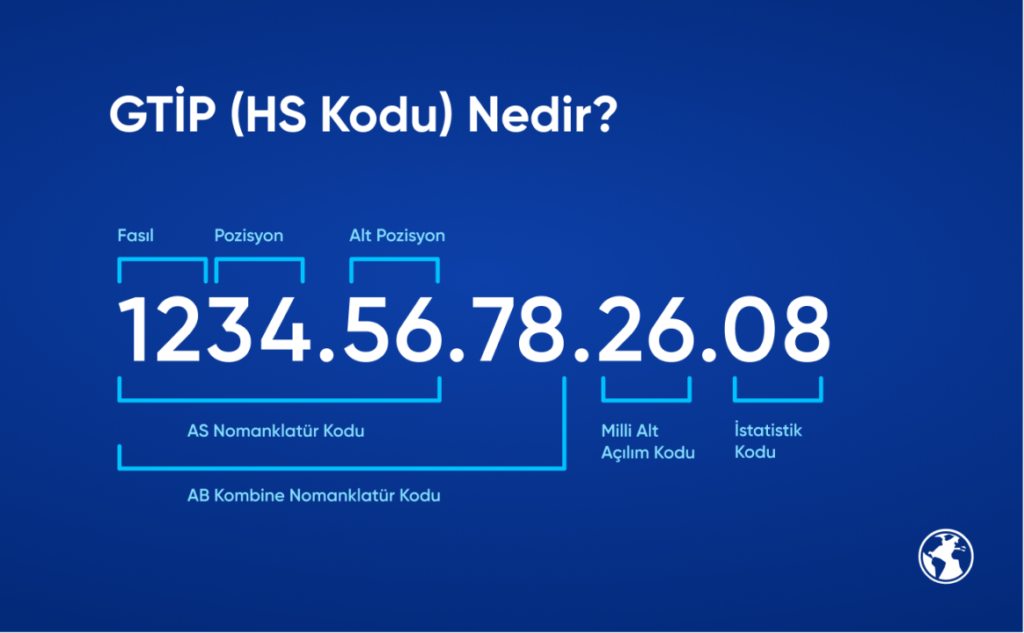
In Turkey, the HS Code is commonly referred to as the GTIP Code (Gümrük Tarife İstatistik Pozisyonu). This code plays a central role in customs procedures because it determines the customs duties, taxes, licensing requirements, and regulatory controls that apply to imported and exported goods.
Selecting the correct HS Code is one of the most important responsibilities in international trade. Incorrect classification can lead to customs delays, financial penalties, additional inspections, or incorrect duty payments.
This guide explains what an HS Code is, why it is important, and how businesses can classify their products correctly.
What Is an HS Code?
The Harmonized System (HS) is an internationally standardized product classification system developed by the World Customs Organization (WCO).
More than 200 countries use this system to classify products for customs purposes. Because every country follows the same basic structure, customs authorities worldwide can identify products consistently, regardless of language or local regulations.
Turkey applies the international HS system while extending it into a more detailed national tariff structure known as the GTIP Code.
What Is a GTIP Code?
GTIP stands for Gümrük Tarife İstatistik Pozisyonu, the Turkish Customs Tariff Statistical Position.
While the international HS Code usually consists of the first six digits, Turkey expands the classification with additional digits to provide greater detail for customs and statistical purposes.
The GTIP Code determines:
- Customs duty rates
- VAT calculations
- Additional import taxes
- Anti-dumping duties
- Import and export restrictions
- Licensing requirements
- Trade statistics
- Customs procedures
For this reason, choosing the correct GTIP Code is essential before importing or exporting any product.
Why Is the HS Code Important?
The HS Code affects nearly every stage of international trade.
It determines:
- Which customs duties must be paid
- Whether import licenses are required
- Which government authorities regulate the product
- Whether preferential trade agreements apply
- Which technical standards must be met
- Whether inspections are required
- How trade statistics are recorded
A single incorrect digit may completely change the customs treatment of a product.
How Is an HS Code Determined?
Assigning the correct HS Code requires more than simply reading a product description.
Customs professionals usually evaluate several characteristics, including:
Product Composition
What materials is the product made from?
For example:
- Steel
- Plastic
- Wood
- Cotton
- Gold
- Aluminum
The material often determines the relevant tariff chapter.
Product Function
What is the primary purpose of the product?
A machine designed for industrial manufacturing may be classified differently from a household appliance, even if both contain similar components.
Manufacturing Stage
The level of processing is also important.
For example:
- Raw materials
- Semi-finished products
- Finished goods
Different production stages often fall under different tariff headings.
Technical Specifications
Customs authorities may also consider:
- Size
- Capacity
- Power rating
- Chemical composition
- Technical performance
- Product design
Providing complete technical specifications helps ensure accurate classification.
Risks of Incorrect Classification
Using an incorrect HS Code can have serious consequences.
Possible risks include:
- Underpayment or overpayment of customs duties
- Customs penalties
- Shipment delays
- Additional inspections
- Product seizure
- Delayed deliveries
- Disputes with customs authorities
In some cases, incorrect classification may also affect a company’s compliance record and increase the likelihood of future inspections.
Best Practices for Product Classification
Businesses can reduce classification errors by following several best practices:
- Maintain detailed technical product information.
- Review product specifications carefully.
- Monitor updates to customs tariff schedules.
- Verify classifications before shipping.
- Consult experienced customs professionals for complex products.
- Keep records of previous customs decisions.
Correct classification should always be confirmed before submitting customs declarations.
HS Codes and International Trade Agreements
Many free trade agreements rely on HS Codes to determine whether products qualify for preferential tariff treatment.
If a product is classified incorrectly, an importer may lose access to reduced customs duties or other trade benefits.
Accurate classification therefore contributes not only to regulatory compliance but also to cost savings in international trade.
How Online Gümrük Supports Product Classification
At Online Gümrük, we help importers and exporters classify their products accurately before customs declarations are submitted.
Our services include:
- HS (GTIP) Code classification
- Customs consulting
- Import customs clearance
- Export customs clearance
- Documentation review
- Regulatory compliance support
- International logistics coordination
Our experienced customs specialists help businesses minimize classification risks and ensure compliance with Turkish customs regulations.
Frequently Asked Questions
Is the HS Code the same in every country?
The first six digits are internationally standardized under the Harmonized System. Individual countries may add additional digits for national tariff purposes.
What is the difference between the HS Code and the GTIP Code?
The HS Code is the international classification system developed by the World Customs Organization. The GTIP Code is Turkey’s expanded national tariff classification based on the HS system.
Can one product have more than one HS Code?
No. Each product should be classified under the single code that most accurately reflects its material, function, and characteristics according to customs rules.
Who can determine the correct HS Code?
While businesses may perform their own classification, many companies rely on experienced customs brokers or customs consultants to ensure accuracy and compliance.
Conclusion
The HS Code is one of the foundations of international trade. It determines customs duties, regulatory requirements, import restrictions, and trade statistics, making accurate product classification essential for every importer and exporter.
Understanding how HS Codes and GTIP Codes work helps businesses reduce customs risks, avoid unnecessary delays, and improve compliance with international trade regulations. By working with experienced customs professionals, companies can ensure that their products are classified correctly and move through customs as efficiently as possible.