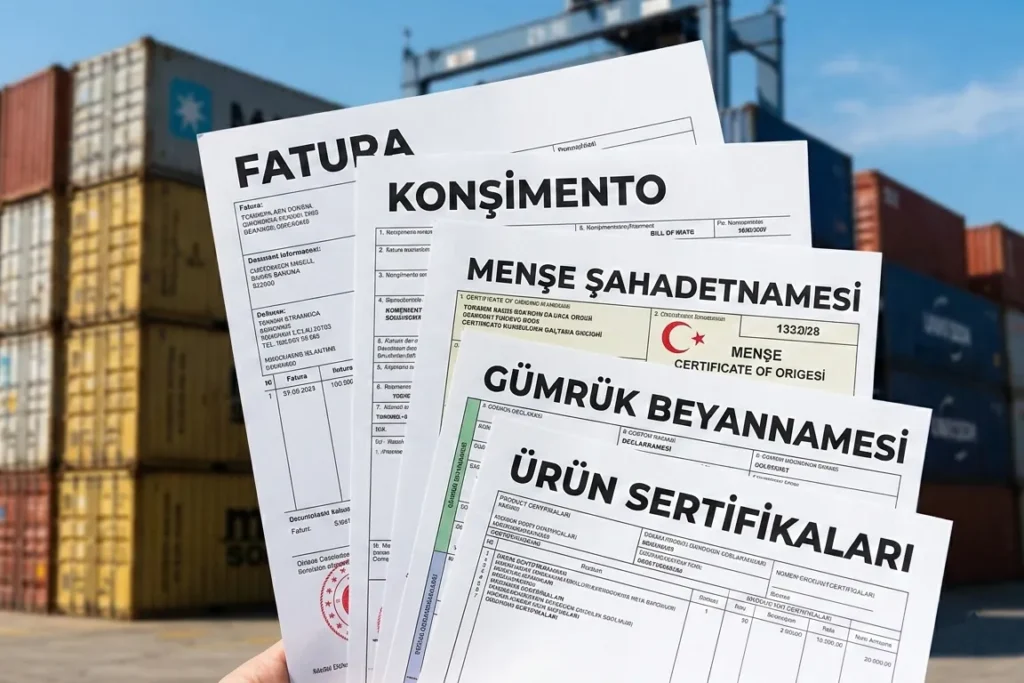
Turkey is one of the world’s most important trade hubs, connecting Europe, Asia, and the Middle East. Every year, millions of shipments enter the country through its seaports, airports, and land border crossings. Regardless of whether you are importing raw materials, machinery, consumer goods, or industrial equipment, preparing the correct documentation is essential for successful customs clearance.
Incomplete or inaccurate paperwork can lead to customs delays, additional inspections, storage charges, and financial penalties. Understanding which documents are required before your shipment arrives can significantly improve the efficiency of your import operations.
This guide explains the most important import documents used in Turkey and why each one plays a critical role in the customs clearance process.
Why Import Documentation Matters
Import documentation serves as the official record of an international transaction. Customs authorities use these documents to verify the identity of the importer, determine the value of the goods, classify products correctly, calculate duties and taxes, and confirm compliance with Turkish regulations.
Accurate documentation helps:
- Speed up customs clearance
- Prevent shipment delays
- Reduce inspection risks
- Ensure legal compliance
- Avoid customs penalties
- Improve supply chain efficiency
Even small inconsistencies between documents may result in additional customs reviews.
1. Commercial Invoice
The Commercial Invoice is the most important document in any import transaction.
It provides detailed information about:
- Buyer and seller
- Product descriptions
- Quantity
- Unit price
- Total value
- Currency
- Payment terms
- Incoterms
- Country of origin
Turkish customs authorities use the commercial invoice to calculate customs duties and verify the declared value of imported goods.
2. Packing List
The Packing List describes exactly how the shipment has been packed.
It usually includes:
- Number of packages
- Gross and net weight
- Package dimensions
- Packaging type
- Product quantities
- Package markings
Although it does not indicate product value, the packing list helps customs officers identify cargo during inspections and supports logistics operations throughout transportation.
3. Bill of Lading or Air Waybill
The transport document proves that the goods have been shipped.
Depending on the transportation method, this document may be:
- Bill of Lading (Sea Freight)
- Air Waybill (Air Freight)
- CMR Consignment Note (Road Transport)
- Rail Transport Document
Transport documents identify the carrier, shipment route, consignee, and cargo details.
4. Certificate of Origin
The Certificate of Origin confirms where the goods were manufactured.
This document may affect:
- Customs duty rates
- Free Trade Agreement eligibility
- Import restrictions
- Trade statistics
Turkey has trade agreements with various countries, making the certificate particularly important for determining preferential duty treatment.
5. Customs Declaration
The Customs Declaration is submitted electronically through the Turkish customs system.
It summarizes all key shipment information, including:
- Importer details
- HS (GTIP) Code
- Customs value
- Product quantity
- Origin country
- Customs procedure
- Applicable duties and taxes
The declaration serves as the official customs record for the import transaction.
6. Import Licenses and Special Permits
Certain products require additional government approvals before they can be imported into Turkey.
Examples include:
- Medical products
- Chemicals
- Food products
- Agricultural goods
- Telecommunications equipment
- Pharmaceuticals
- Defense-related products
Importers should verify regulatory requirements before arranging shipment.
7. Certificates of Conformity
Some products must comply with Turkish technical regulations and safety standards.
Depending on the product category, customs authorities may request:
- CE Certificates
- Test Reports
- Quality Certificates
- Inspection Certificates
- Technical Documentation
Failure to provide these documents may delay customs clearance or prevent import approval.
Common Documentation Errors
Many customs delays result from avoidable documentation mistakes.
Common issues include:
- Incorrect product descriptions
- Invoice value inconsistencies
- Wrong HS codes
- Missing certificates
- Incorrect country of origin
- Missing signatures
- Incomplete commercial information
Carefully reviewing documents before shipment helps minimize these risks.
Tips for Faster Import Clearance
Businesses can improve customs efficiency by following several best practices:
- Prepare documents before cargo departure.
- Verify product classifications carefully.
- Ensure consistency across all documents.
- Keep digital copies readily available.
- Confirm regulatory requirements in advance.
- Work with experienced customs professionals.
Proper preparation often saves both time and money.
How Online Gümrük Supports Importers
At Online Gümrük, we assist importers throughout the customs clearance process by helping prepare and verify documentation before shipments arrive in Turkey.
Our services include:
- Import customs clearance
- Documentation review
- HS code classification
- Customs consulting
- Warehousing solutions
- International freight coordination
- Customs compliance support
Our experienced team works to ensure that import documentation is accurate, complete, and fully compliant with Turkish customs regulations.
Frequently Asked Questions
Are all these documents required for every shipment?
Not always. Required documents vary depending on the product type, country of origin, transportation method, and applicable regulations.
Can customs request additional documents?
Yes. Customs authorities may request supporting documents or certificates depending on the shipment and regulatory requirements.
Who prepares the customs declaration?
The customs declaration is typically prepared and submitted electronically by a licensed customs broker on behalf of the importer.
What happens if documents contain errors?
Incorrect or incomplete documentation may result in shipment delays, additional inspections, administrative penalties, or increased storage costs.
Conclusion
Successful importing into Turkey begins with accurate documentation. Commercial invoices, packing lists, transport documents, certificates of origin, customs declarations, and product-specific certificates all play an essential role in the customs clearance process.
Businesses that prepare complete and accurate documentation before shipping can reduce delays, improve compliance, and maintain more efficient international supply chains. Working with experienced customs professionals further helps ensure that imports are processed smoothly and in accordance with Turkish customs regulations.